Kauhale Makanahele
Noho Workshop, Hawaii
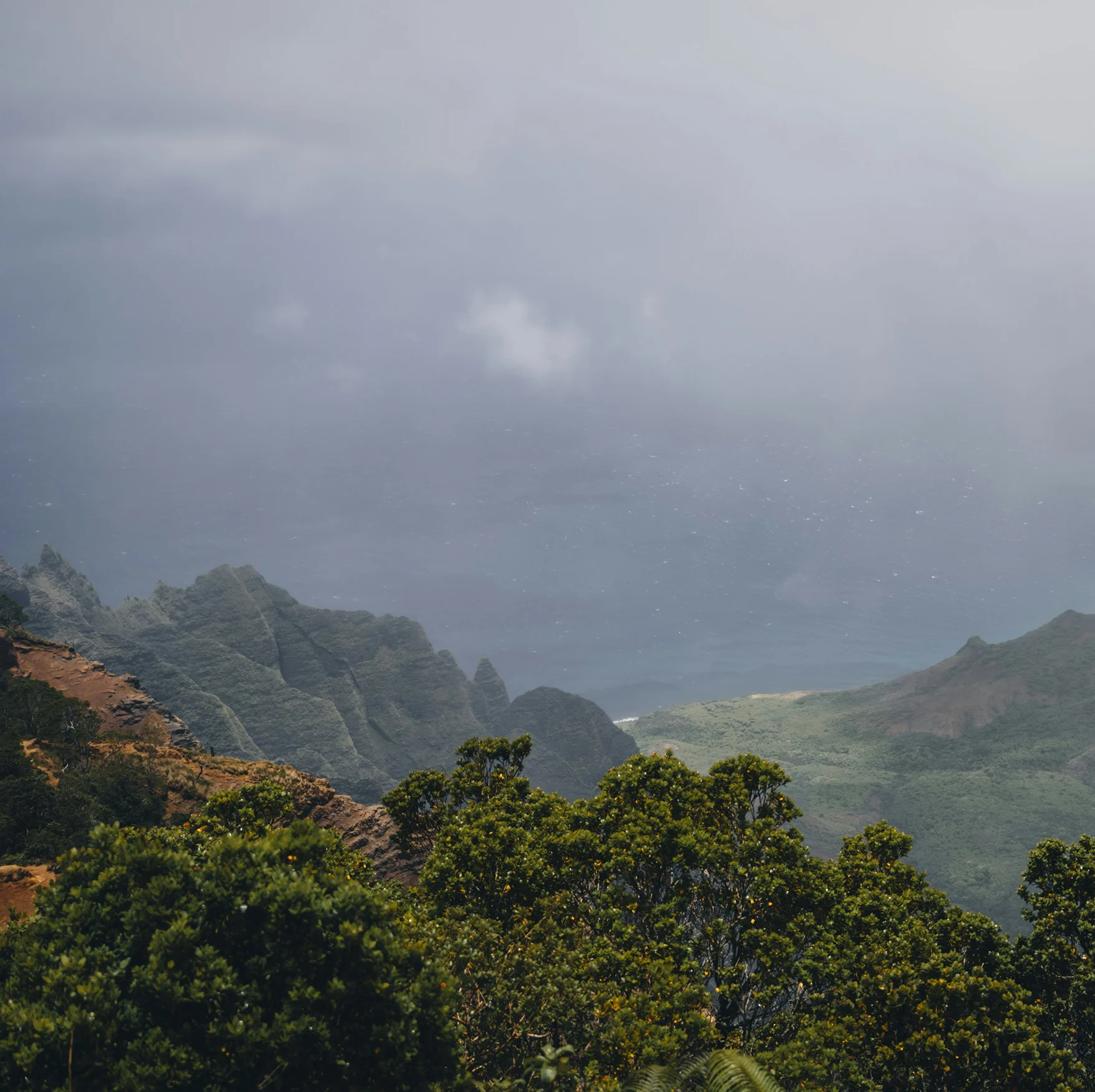
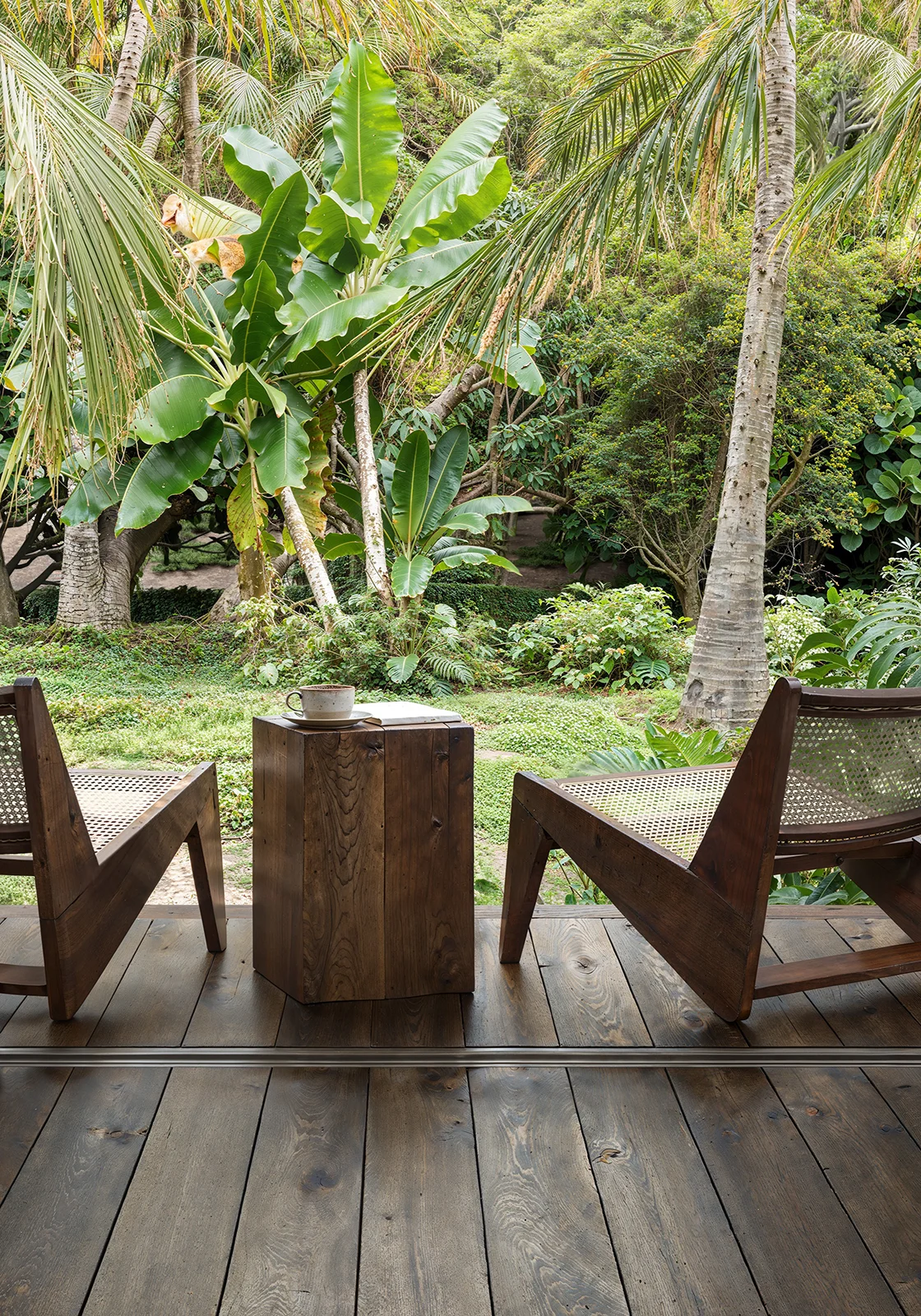
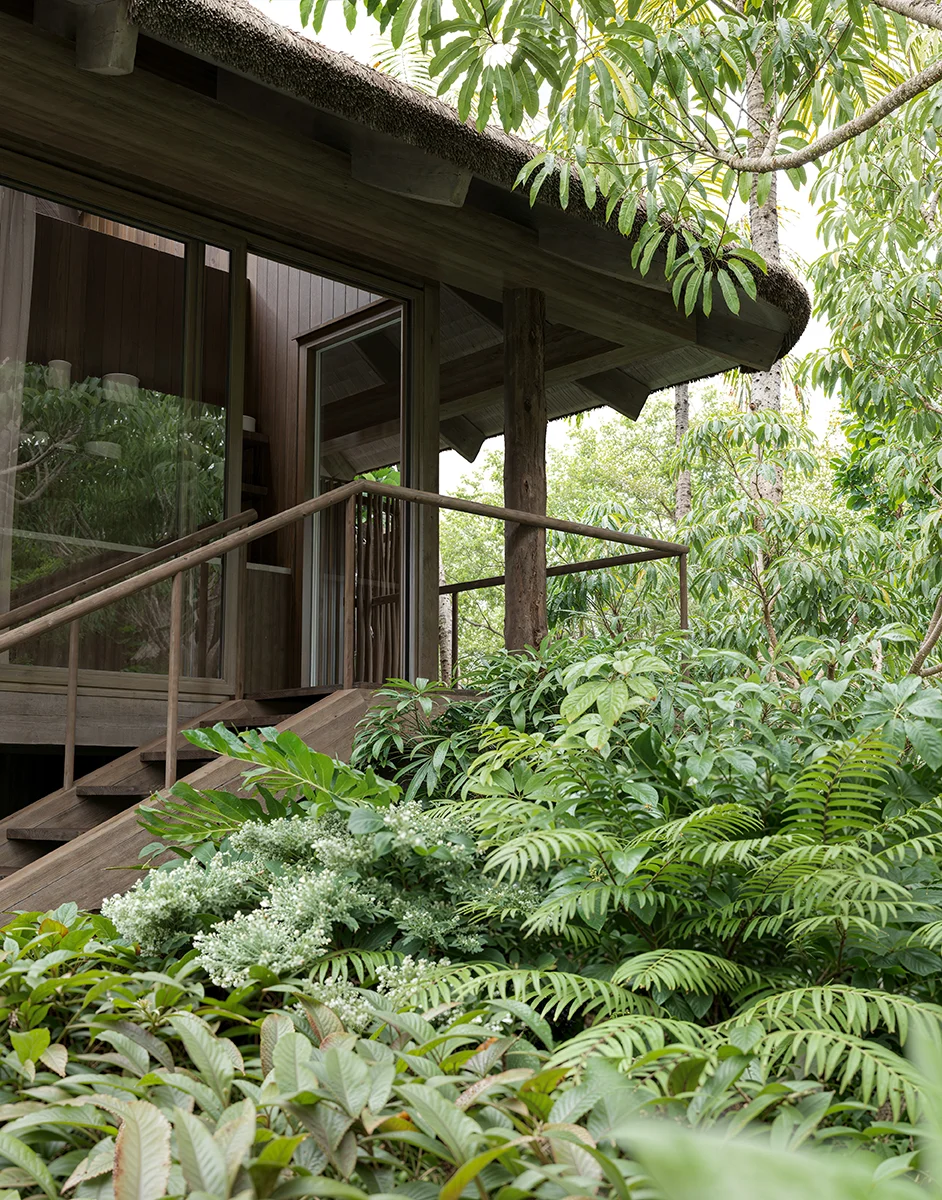
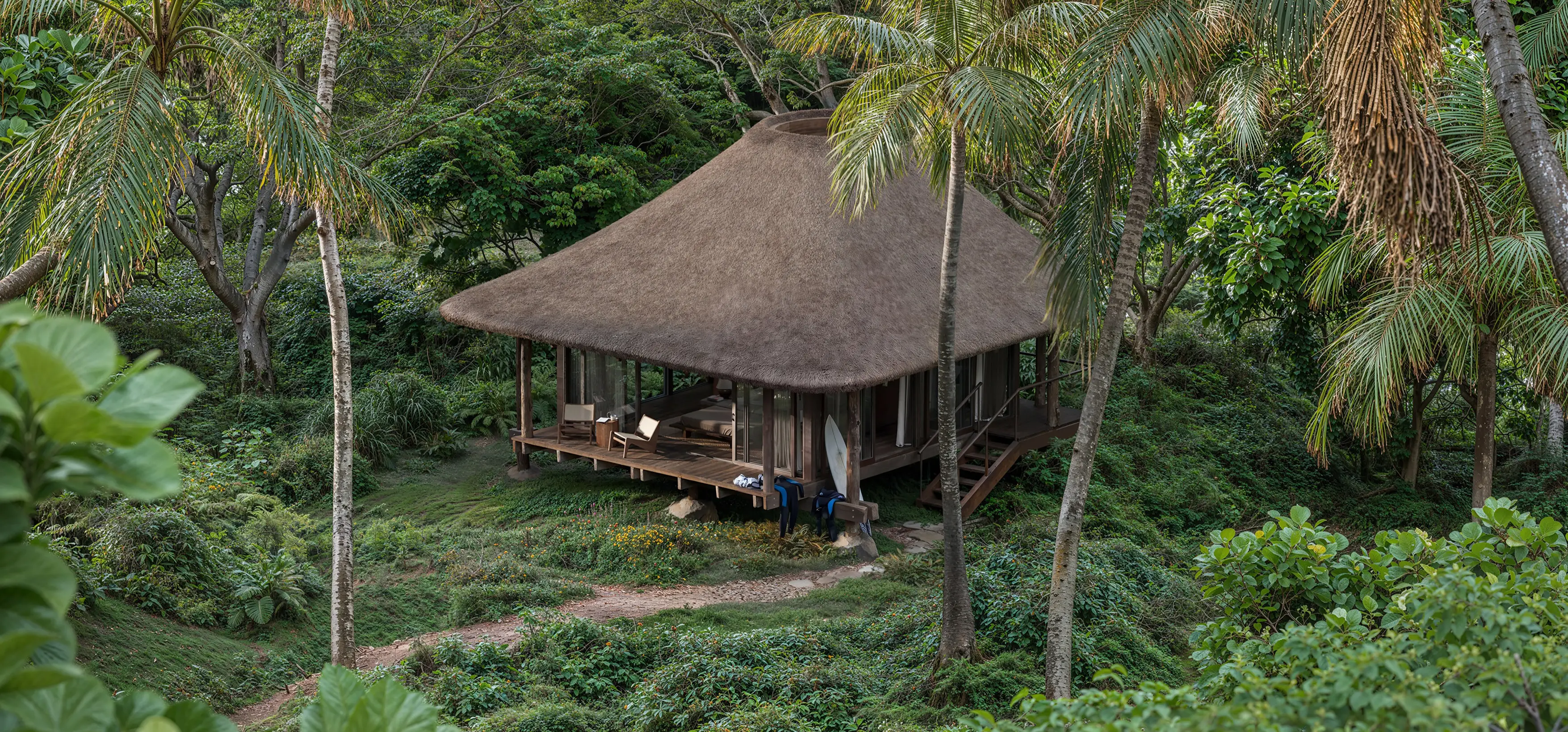
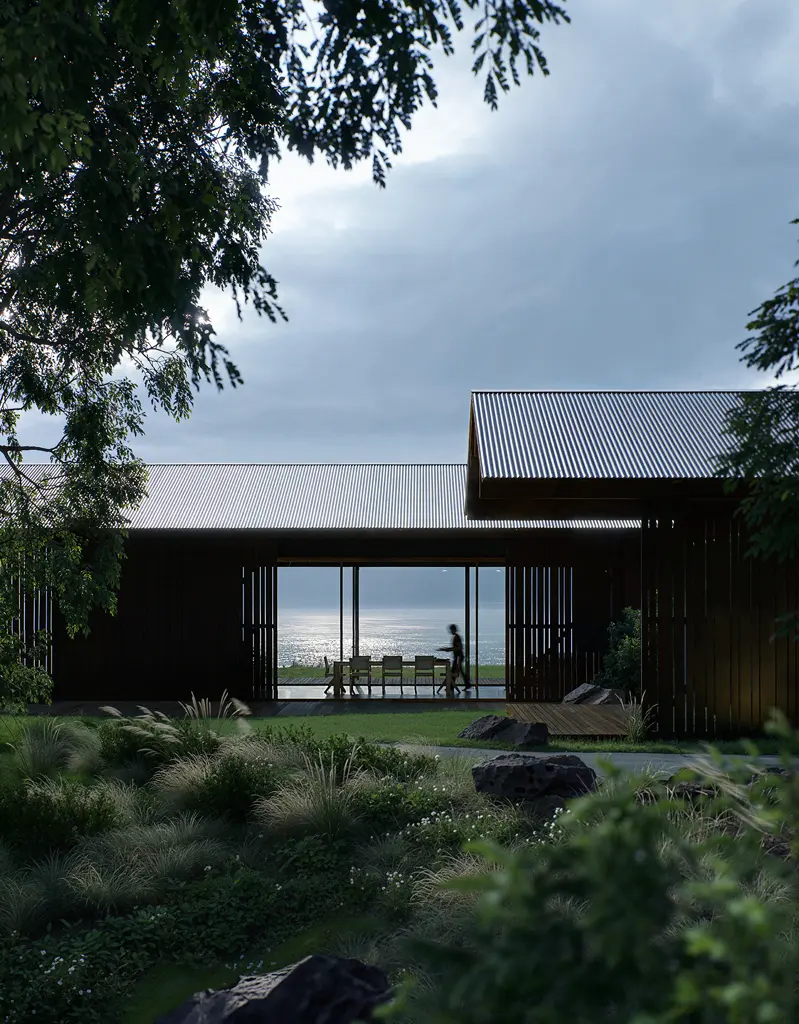
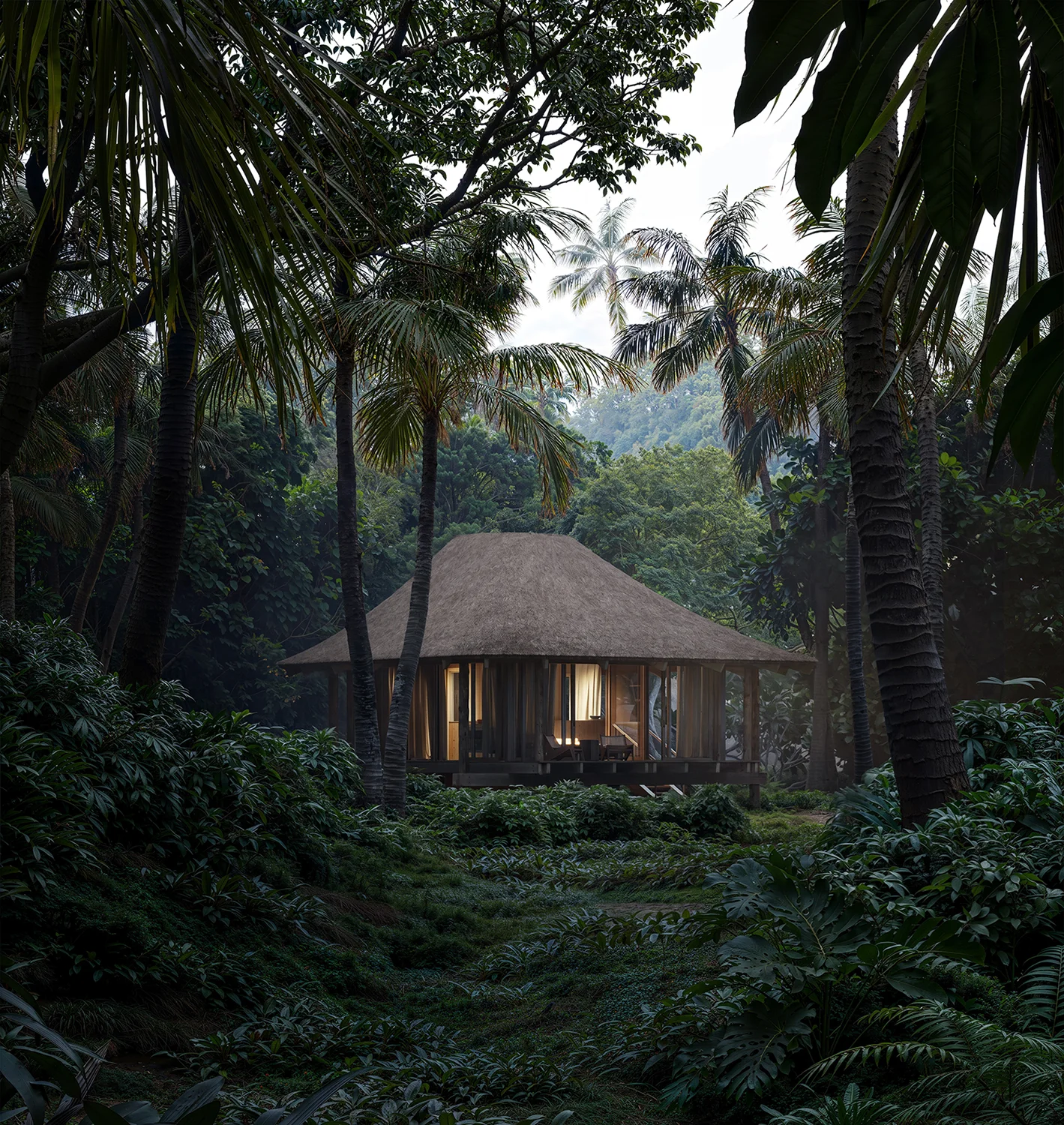
Hale Makanahele, meaning house of the forest people, draws its name from the Hawaiian understanding of the wild—untamed, of the wilderness, and deeply rooted in the forest. The project is conceived as a quiet, timeless refuge nestled within the Hawaiian jungle, grounded in the vernacular of the traditional thatched hale and guided by principles of restraint, material honesty, and a deep respect for climate and place. The structure is intentionally humble and elemental, prioritizing age, shadow, and craft over polish or perfection.
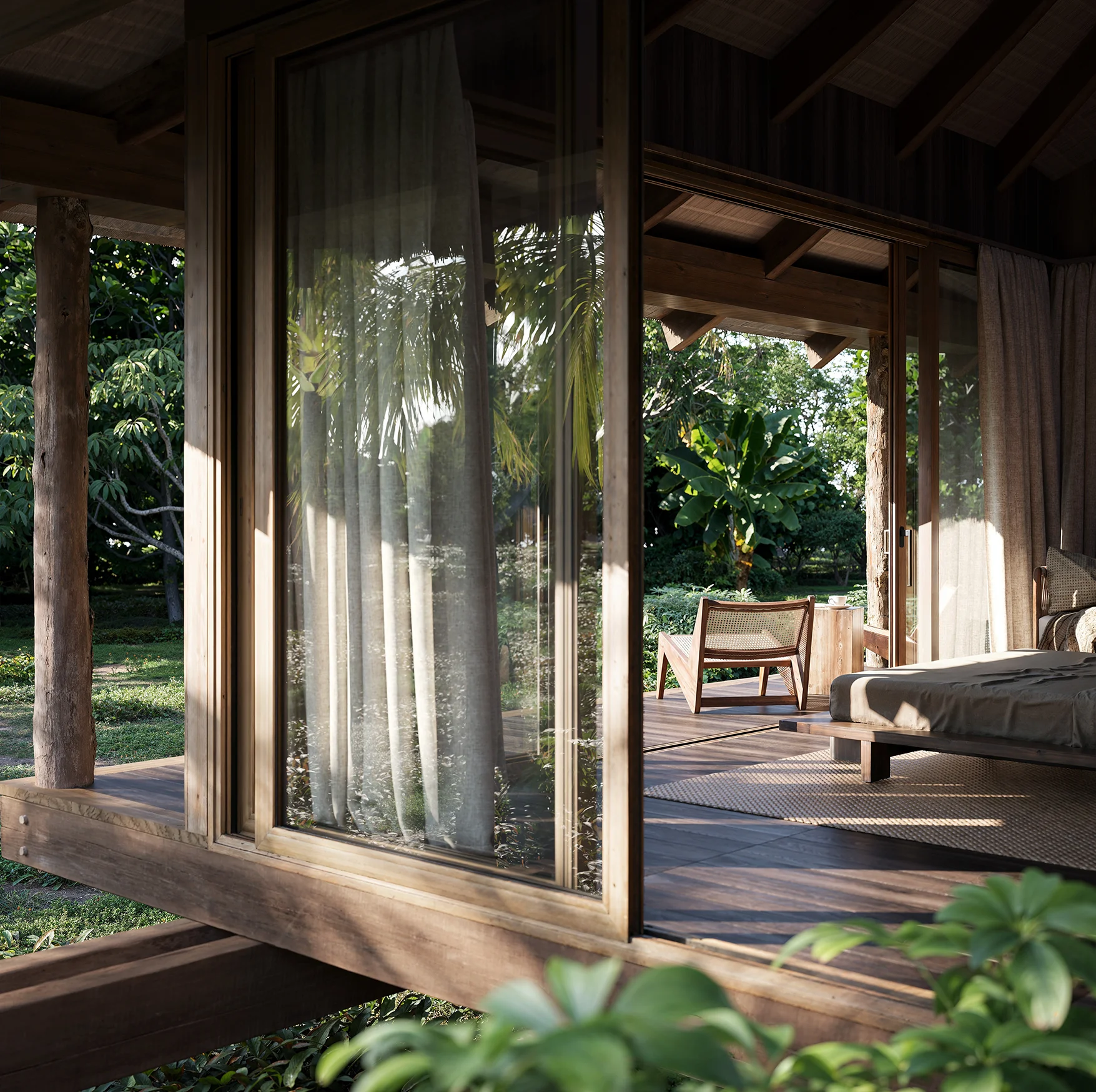
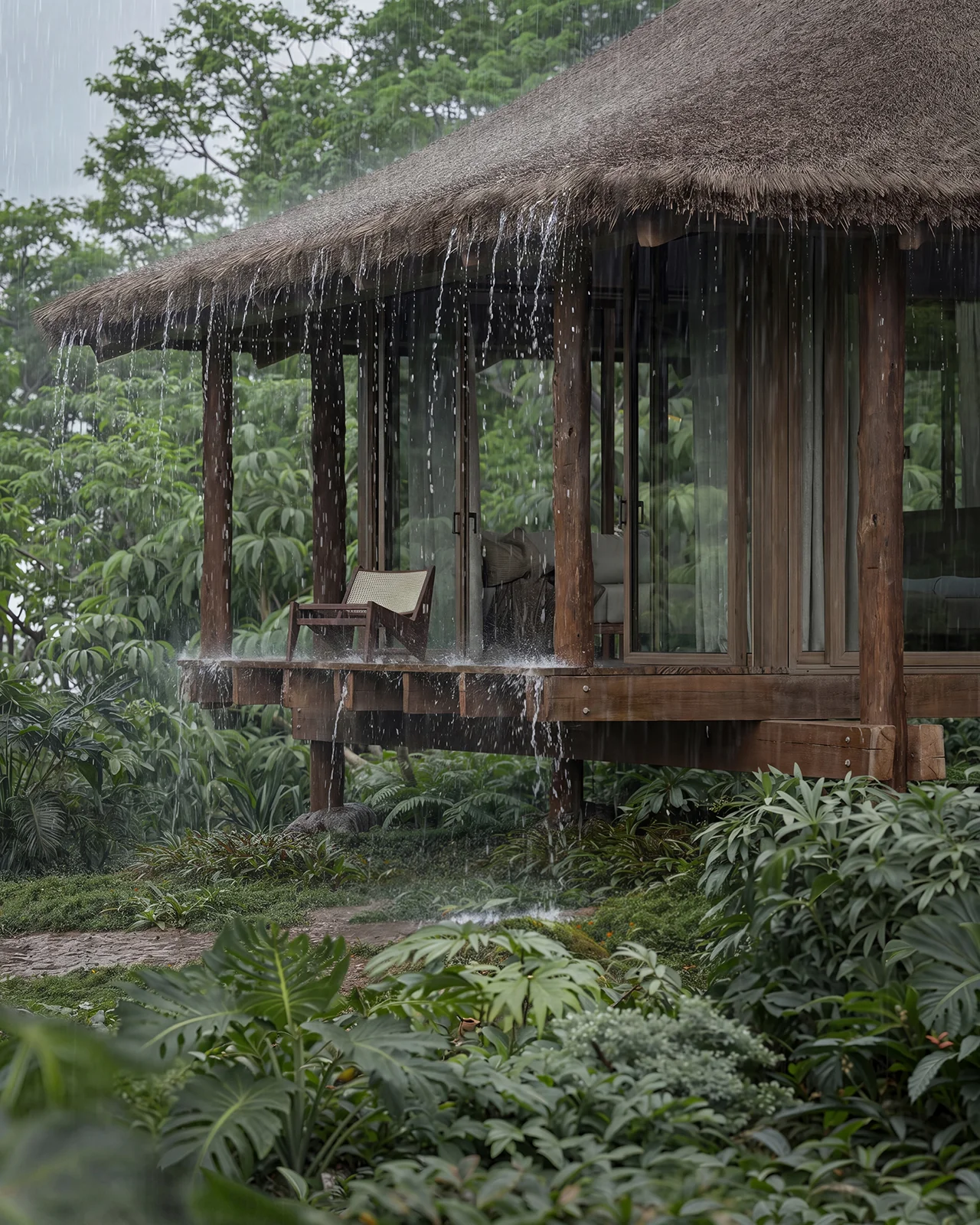
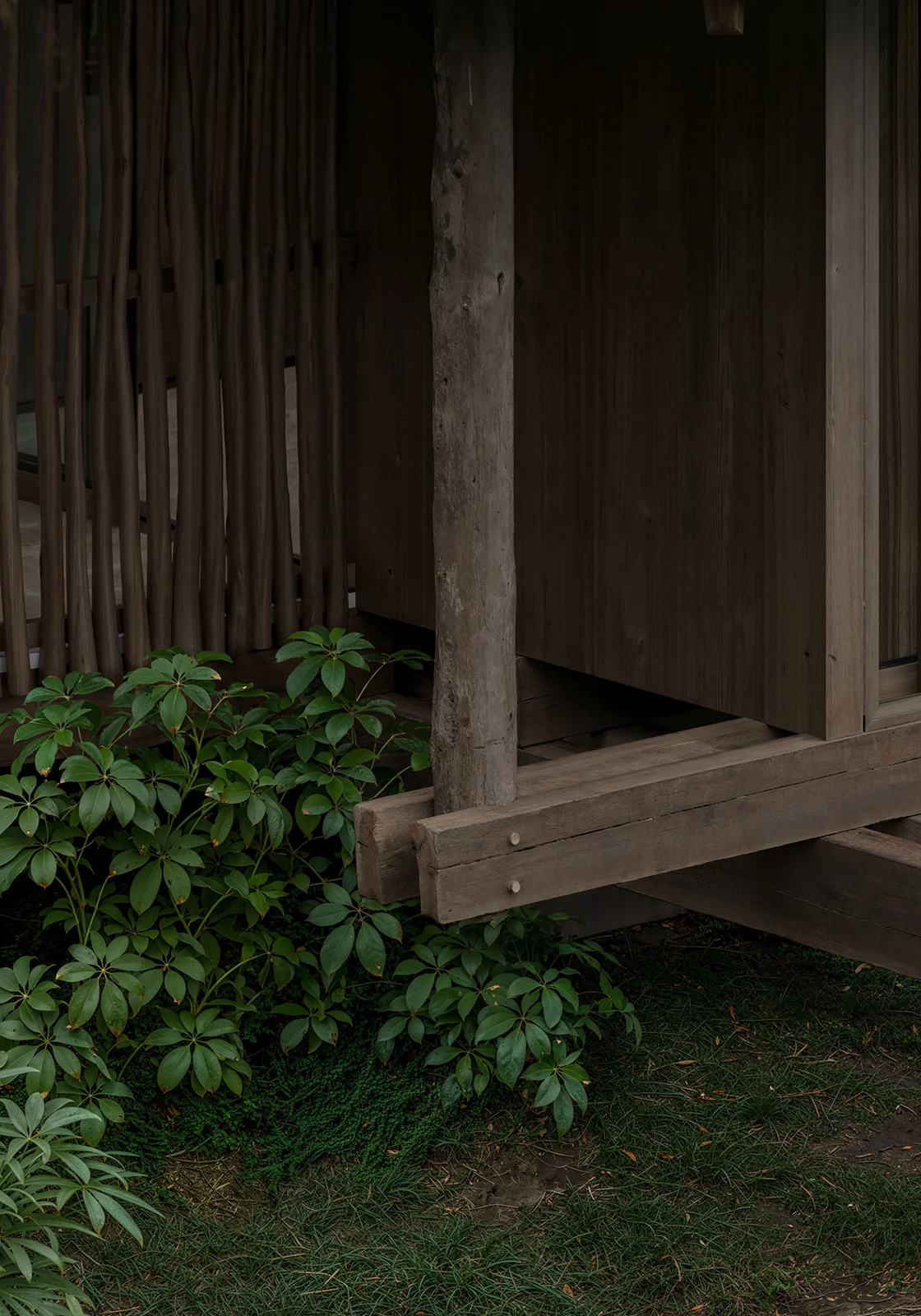
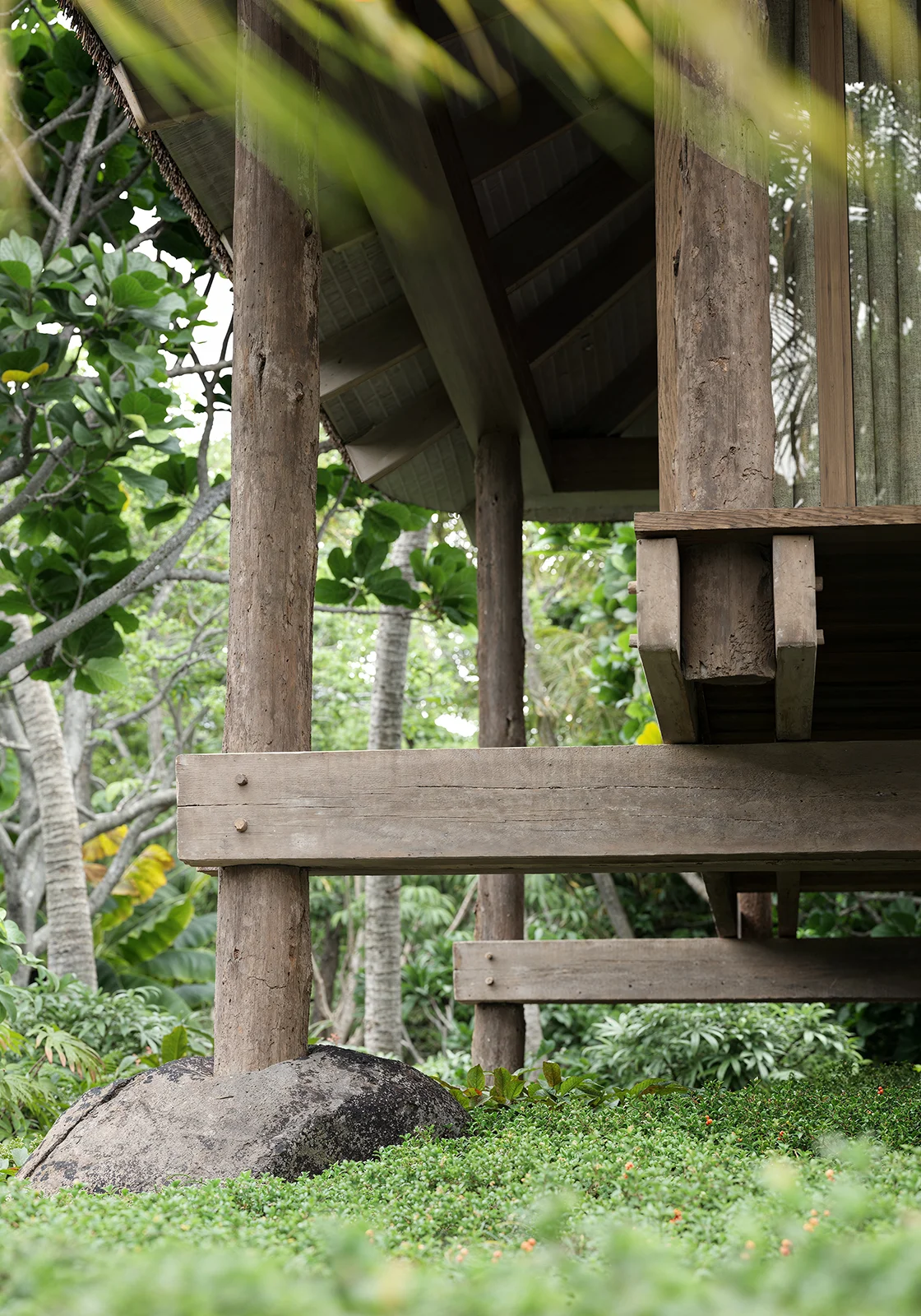
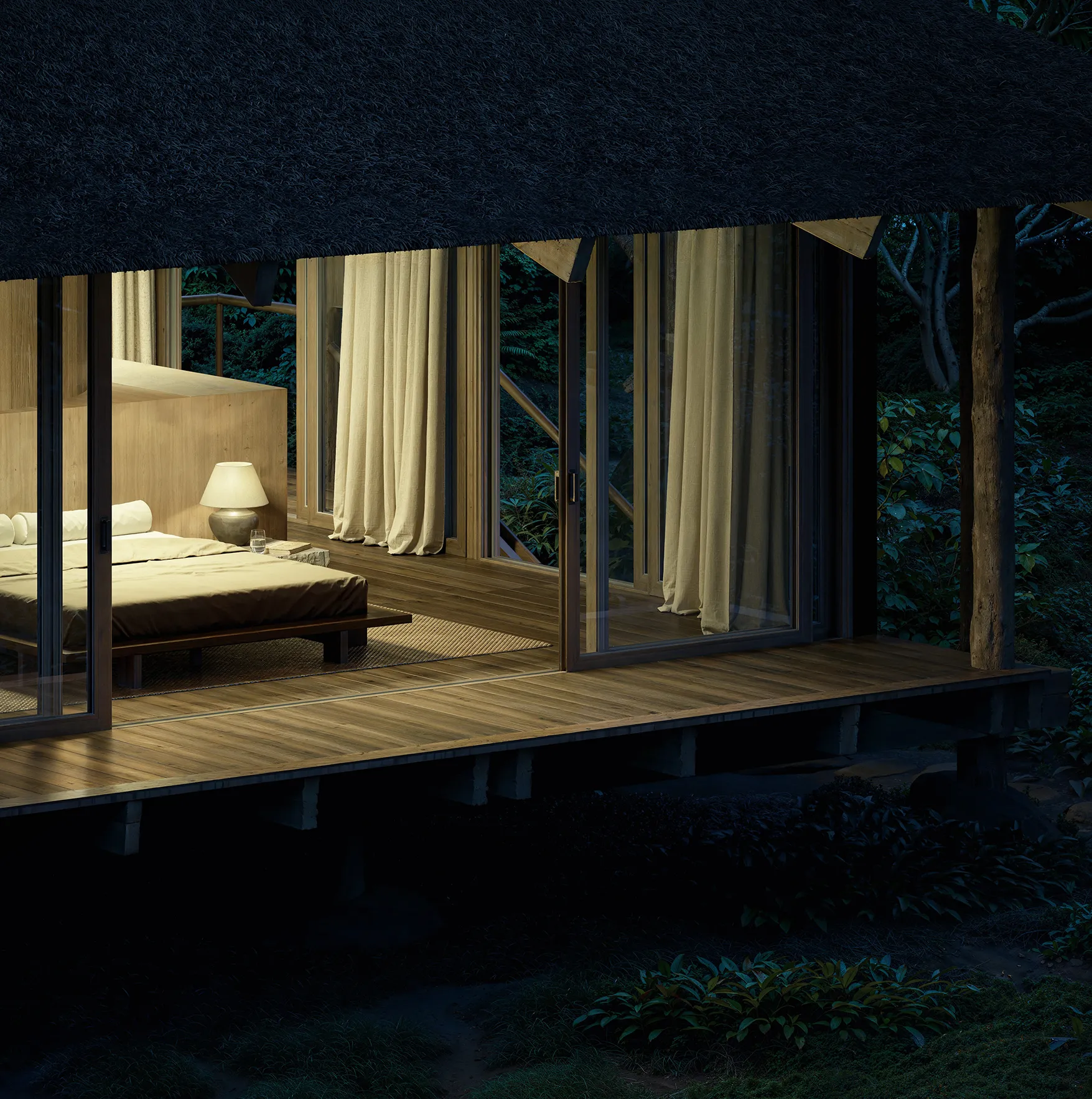
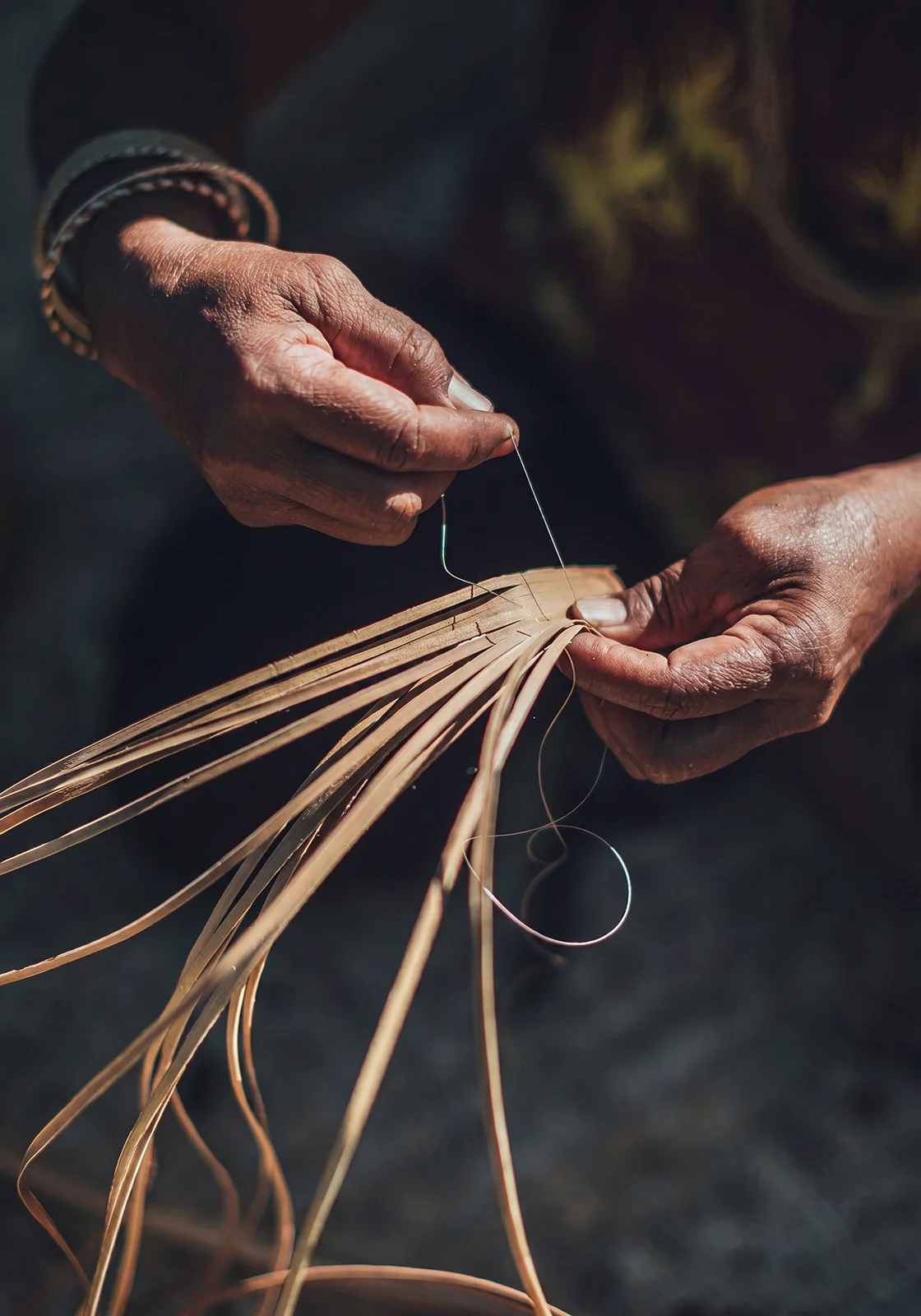
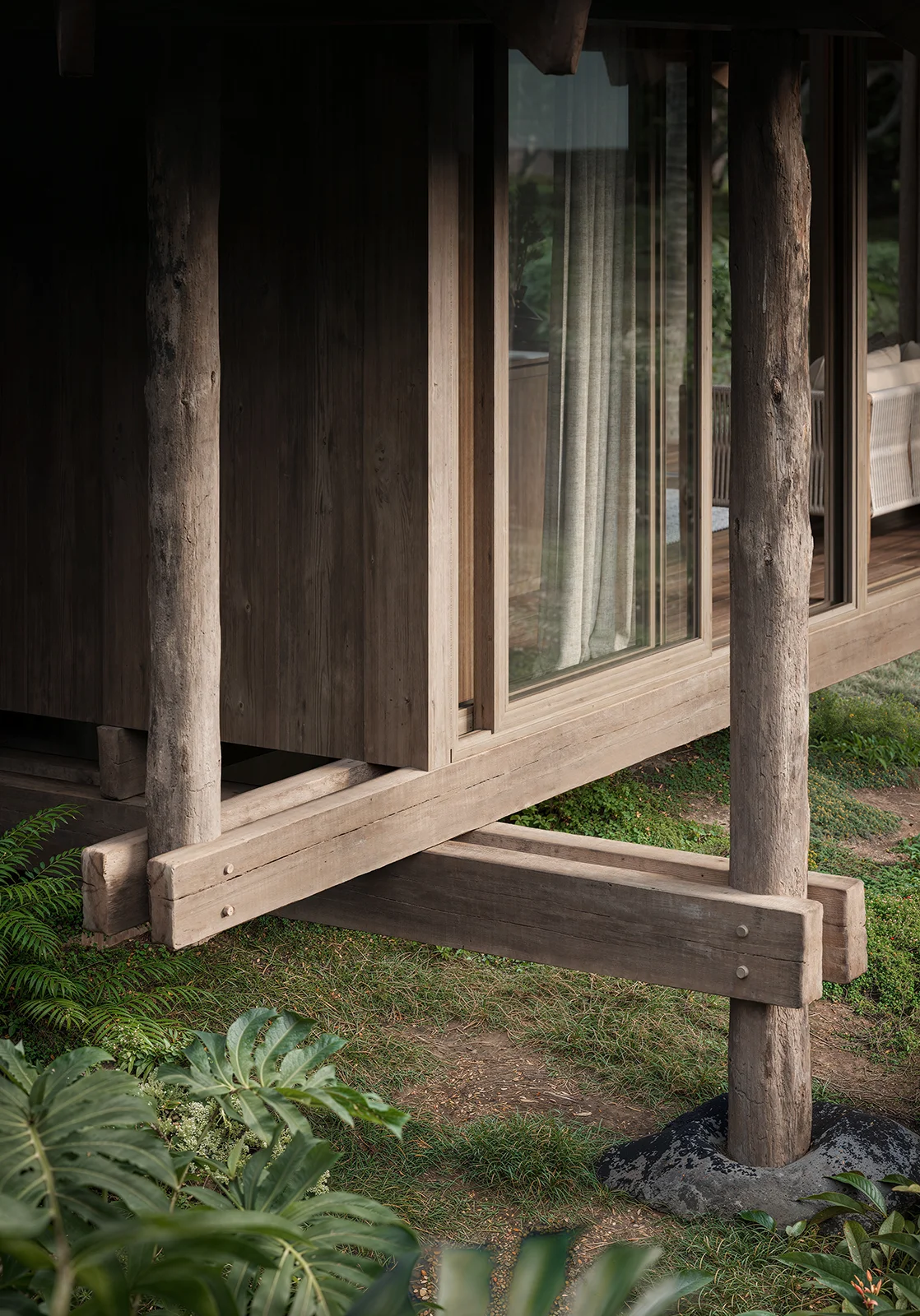
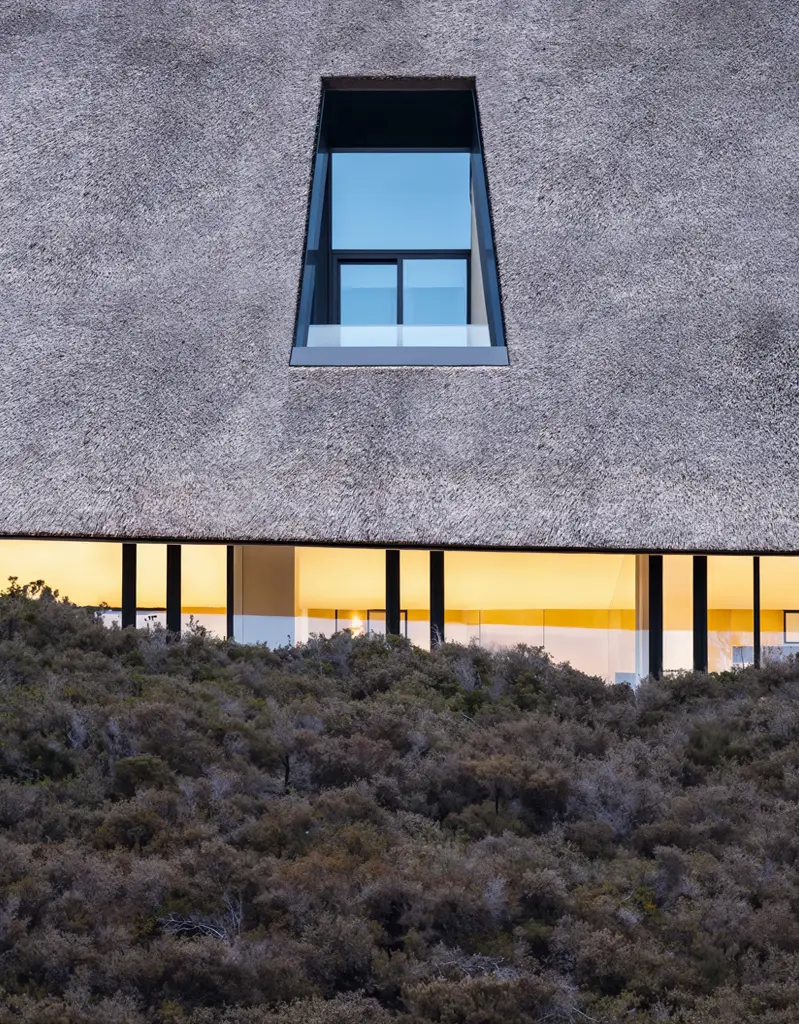
Natural wood posts rise directly from stone footings, expressing a direct relationship to the earth and recalling pre-modern building traditions shaped by necessity and environment. Above, a thick thatched roof forms both shelter and identity, its depth and texture fully legible from within. Exposed purlins and layered thatching define the interior ceiling, allowing the construction itself to become ornament—irregular, tactile, and expressive of the hands that built it.
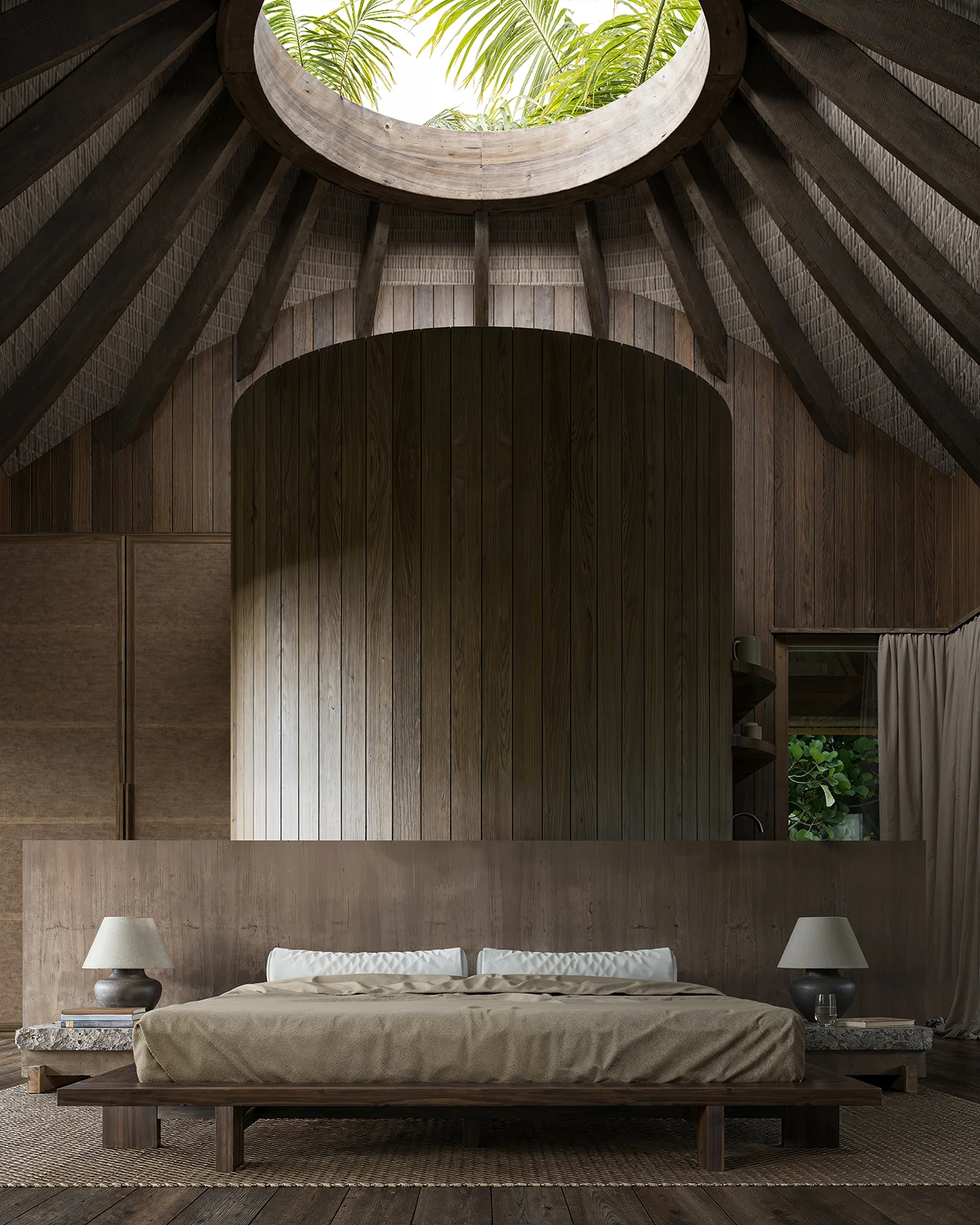
At the core of the roof, an oculus is carefully positioned above the bathroom, acting as a conduit for daylight to wash gently through the heart of the space. Rather than an opening of exposure, it is a calibrated moment of light—soft, vertical, and atmospheric—reinforcing a quiet ritual connection between daily life and the surrounding forest while maintaining a sense of enclosure and protection.
An adjacent outdoor shower is formed by natural wood screening that provides privacy while allowing fragments of light and air to pass through. The enclosure filters the jungle rather than shutting it out, creating a bathing experience that feels intimate, grounded, and inseparable from its environment.
The interior framing is dark, moody, and deeply natural, allowing light to enter selectively and emphasizing the contrast between shadow and form. Materials are left to weather, patina, and soften over time, so the hut feels as though it has always belonged to the land—wild yet familiar, aged yet resilient. Fabrics are restrained and earthy—browns, linens, and muted natural tones—layered sparingly to enhance comfort without distracting from the architecture’s elemental character.
The result is a dwelling that feels both ancient and intimate: a lived-in shelter shaped by climate, craft, and restraint, where Hawaiian tradition and a reverence for the natural world converge in a deeply grounded, contemplative place—true to the spirit of Hale Makanahele.
Hale Makanahele, meaning house of the forest people, draws its name from the Hawaiian understanding of the wild—untamed, of the wilderness, and deeply rooted in the forest. The project is conceived as a quiet, timeless refuge nestled within the Hawaiian jungle, grounded in the vernacular of the traditional thatched hale and guided by principles of restraint, material honesty, and a deep respect for climate and place. The structure is intentionally humble and elemental, prioritizing age, shadow, and craft over polish or perfection.